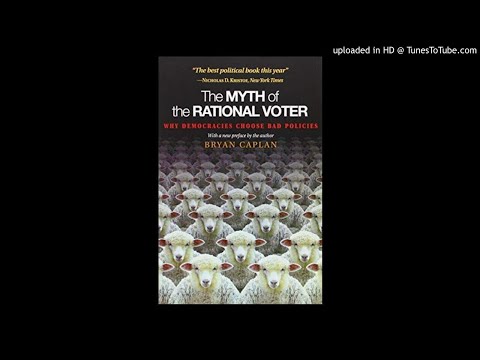
Bryan Caplan on The Myth of the Rational Voter 6/25/2007
EconTalk
YouTube Description
Bryan Caplan, of George Mason University and blogger at EconLog, talks about his book, The Myth of the Rational Voter: Why Democracies Choose Bad Policies. Caplan argues that democracies work well in giving voters what they want but unfortunately, what voters want isn't particularly wise, especially when it comes to economic policy. He outlines a series of systematic biases we often have on economic topics and explains why we have little or no incentive to improve our understanding of the world and vote wisely. So, it's not special interests that are messing things up but the very incentives that lie at the heart of a vote-based system. This is a disturbing and provocative lens for viewing political outcomes. http://www.econtalk.org/caplan-on-the-myth-of-the-rational-voter/
Claims (32)
When experts and laymen disagree, the rational default presumption is that the expert is probably right—a presumption we rely on for mechanics, doctors, and historians—though it is only a starting point that can be overridden by a specific, testable account of expert bias.
Sustaining faith in democracy after a lifetime of observing its dysfunction (as journalist William Greider does) is irrational in the same way as a doomsday cult that grows more confident after its prediction fails—a failed track record should diminish, not confirm, confidence in the institution.
Democracies often pursue bad policies.